Materials Used for Kitchen Cabinets: Body and Door Materials
Kitchen cabinets are a fundamental building block of any kitchen, offering a combination of aesthetics and functionality. Choosing the right materials is crucial for ensuring kitchen cabinets are long-lasting, sturdy, and stylish. This article will provide a detailed examination of cabinet body and door materials. Different material types for kitchen cabinets offer aesthetic variety while also meeting user expectations in terms of functionality.
Hull Materials
The cabinet body of kitchen cabinets is a crucial element that determines the cabinet’s durability, internal layout, and functionality. Body materials are generally chosen from thicker and stronger materials. Here are the most commonly used body materials:
1.1. MDF Lam ( Medium) Density Fiberboard )
MDF stands for medium-density fiberboard and is a commonly used material for the body of kitchen cabinets. MDF is produced by combining wood fibers with resin and processed under high temperature and pressure.
Advantages:
- Smooth Surface : Provides an ideal surface for painting and coating processes.
- Durability : While resistant to humid environments, it can be protected against water with a quality coating.
- Economical : It is more affordable than solid wood and offers a wide range of color options.
Disadvantages:
- Water Sensitivity : May swell upon direct contact with water. Therefore, requires a suitable coating.
1.2. Chipboard ( Melamine Coated Chipboard)
Suntalam is a surface coating material typically produced by applying a melamine coating to particleboard . Besides being economical, Suntalam offers a variety of options in terms of practicality and aesthetics.
Advantages:
- Economical : This is a very affordable option.
- Various Designs : Offers variety in decoration with different color and pattern options.
- Durability : Melamine coating is resistant to chemicals and scratches.
Disadvantages:
- Durability : Particle board may have lower durability compared to other materials and may deform in the long term.
- Cover Materials
Kitchen cabinet doors are the most aesthetically pleasing part of a kitchen. Door materials offer various design options, adding style and elegance to kitchens. Here are some of the popular door materials today:
2.1. Chipboard ( Melamine Coated Chipboard)
Chipboard doors, usually with a melamine coated surface, offer an aesthetic and durable structure. Chipboard is preferred for its practicality and price-performance ratio.
Advantages:
- Affordable Price : Particle board doors are ideal for those seeking economical solutions.
- Various Surface Options : A variety of colors, patterns, and textures are available.
- Durable Coating : Melamine coating is resistant to chemicals and impacts.
Disadvantages:
- Low Durability : Particleboard covers can wear out over time and peel off at the corners.
2.2. MDF Lam ( Medium) Density Fiberboard )
MDF Lam doors are produced by applying a laminate or melamine coating to the surface of MDF material. They offer a wide range of aesthetically pleasing color and texture options.
Advantages:
- Smooth Surface : MDF offers an excellent surface for painting and coating.
- Durability : It can be made water-resistant with a suitable coating.
- Price-Performance : MDF laminate doors offer affordable yet stylish solutions.
Disadvantages:
- Water Sensitivity : May swell in high humidity environments, therefore handle with care.
2.3. High Gloss Kitchen Cabinet Door
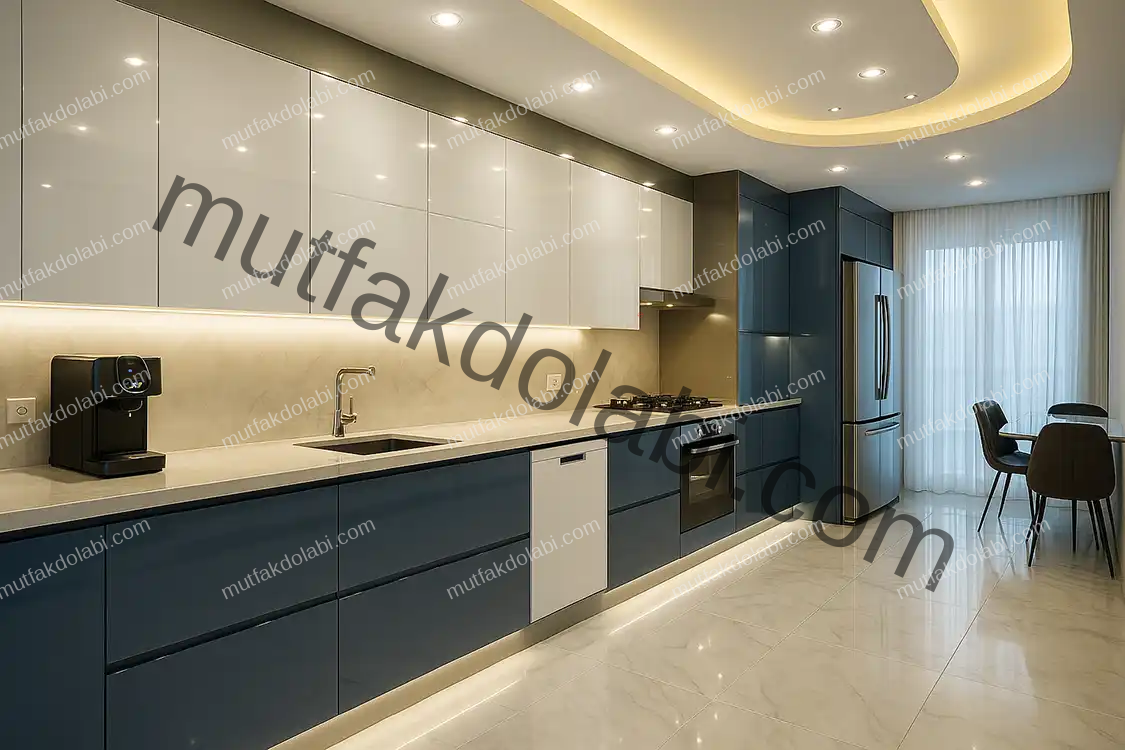
High -gloss cabinet doors, with their glossy surfaces, are a frequently preferred option in modern kitchens. High -gloss kitchens are among the most popular kitchen cabinet models today. They are manufactured using glossy acrylic or polyester coatings.
Advantages:
- Glossy Surface : High gloss cabinet doors give kitchens a modern and stylish look.
- Surface Cleaning : Glossy surfaces don’t easily show stains and dirt, which is an advantage in terms of cleaning.
- Aesthetics : It offers a transparent and glossy surface that reflects light, adding a bright and airy look to the kitchen.
Disadvantages:
- Scratch Susceptibility : Glossy surfaces may be susceptible to scratches.
- Fingerprints and Stains : High- gloss surfaces can show fingerprints, so regular cleaning is required.
2.4. Membrane Kitchen Cabinet Door
Membrane covers are generally made from PVC-coated MDF material. These covers can be molded under heat and pressure to create custom designs.
Advantages:
- Durability : Membrane covers are highly resistant to moisture and water.
- Aesthetic Appearance : Available in glossy and matte options to suit various decoration styles.
- Various Patterns : Different pattern and texture options can add elegance to your kitchen.
Disadvantages:
- Limited Options : Offers a more limited selection of colors and patterns compared to other cover materials.
- High Temperature Sensitivity : Deformation may occur when exposed to high temperatures.
2.5. Lacquered Kitchen Cabinet Door
Lacquered cabinet doors are high-quality cabinets produced using a painting method. Typically applied to MDF or HDF materials, lacquered cabinets come in glossy or matte finishes. The ability to create lacquered kitchen cabinets in any style using CNC machining , resulting in modern designs, is a major reason why this type of kitchen cabinet is so popular.
Advantages:
- Elegant Appearance : Lacquered covers offer a perfectly smooth surface and aesthetic appearance.
- Durability : High-quality lacquered lids are durable and long-lasting.
- Different Options : With glossy or matte finish options, there’s something for every taste.
Disadvantages:
- Scratch-Sensitive : Lacquered surfaces are susceptible to scratches.
- Higher Price : Lacquered lids can be more expensive than those made from other materials.
2.6. Acrylic Kitchen Cabinet Door
Acrylic is a commonly preferred material in modern kitchens, offering both glossy and matte finishes. Acrylic cabinet doors stand out with their elegance and aesthetic appearance.
Advantages:
- Gloss and Transparency : Acrylic covers offer a glossy and transparent surface, adding a bright and airy feel to the kitchen.
- Easy Cleaning : Acrylic surfaces are stain-resistant and very easy to clean.
- Aesthetic Options : With various color and pattern options, it adds elegance to modern kitchens.
Disadvantages:
- Scratch Susceptibility : Acrylic covers can be susceptible to scratches.
- High Cost : Acrylic lids can be more expensive than other lid materials.
2.7. Solid Wood Kitchen Cabinet Doors
Solid wood is an ideal choice for those seeking a natural and luxurious look. Solid wood doors are a luxurious option, each with unique natural patterns.
Advantages:
- Natural Beauty : Each piece is unique and offers an aesthetically pleasing and elegant look with its natural patterns.
- Durability : With proper care, it can last for many years.
- Warmth : Solid wood cabinet doors can add a warm and natural feel to the kitchen.
Disadvantages:
- Water Sensitivity : Wooden covers can swell or crack in humid environments, so water-resistant coatings may be necessary.
- Higher Price : Solid wood doors can be more expensive.
2.8. Extra Aluminum Glass Lids
These cabinet doors, made with glass panels mounted on an aluminum frame, are an aesthetically pleasing option frequently preferred in modern kitchens. They are both stylish and durable.
Advantages:
- Modern Look : The combination of aluminum frame and glass gives kitchens a stylish and modern look.
- Durability : Aluminum is resistant to rust and has a long lifespan.
- Aesthetics : Glass surfaces make kitchens look larger and more spacious.
Disadvantages:
- Fragility : Glass can be sensitive to impacts and should be handled with care.
- High Price : Combinations of aluminum and glass are generally expensive.
Conclusion
The choice of materials for kitchen cabinets varies depending on aesthetics, durability, and intended use. Body materials determine the cabinet’s strength and longevity, while door materials aesthetically alter the kitchen’s overall look. Economical options like MDF, particleboard , and melamine coatings offer more affordable solutions, while luxury options like acrylic, lacquer, and solid wood can add style and elegance. Choosing the right materials ensures that kitchen cabinets are both functional and aesthetically pleasing.