1. Kitchen Countertop Height
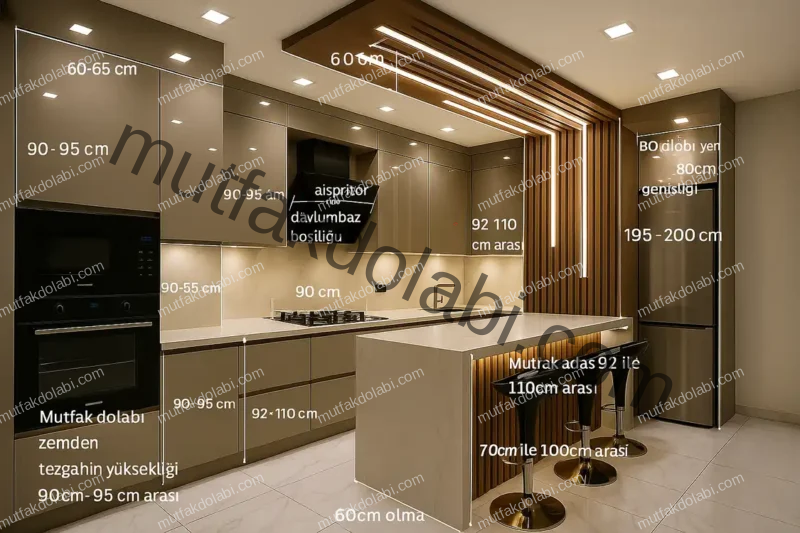
Kitchen countertop height generally ranges between 85 cm and 95 cm. This height range provides a comfortable workspace for most people. However, the correct height can vary depending on the user’s height, kitchen cabinet dimensions, and the tasks you plan to perform in the kitchen. For example, a countertop height closer to 95 cm may be more suitable for taller individuals, while 85 cm may be more appropriate for shorter individuals. Also, if you frequently prepare or cook food at the countertop, you should consider the ideal height for these functions.
An incorrectly high countertop can cause back and neck pain during kitchen tasks that require standing for long periods. Therefore, having the correct countertop height is important for both comfort and health. An ergonomic countertop helps you tire less and work more efficiently in the kitchen. Furthermore, the correct height ensures that time spent in the kitchen is enjoyable and comfortable, so the cooking process ceases to be a burden.
2. Kitchen Countertop Width
Kitchen countertop width is generally between 60 cm and 65 cm. However, the answer to the question of how wide a kitchen countertop should be varies depending on your kitchen space and usage needs. A wider countertop provides more work and storage space. A wide countertop also creates more movement space in the kitchen, allowing multiple people to work simultaneously. This is a great advantage, especially for large families or those who frequently host guests.
3. Kitchen Countertop Length
Countertop length varies depending on the size and layout of your kitchen. Ideal kitchen dimensions allow you to maximize your usable space. It’s important to consider countertop length when planning the layout. To increase the functionality of your kitchen, you should plan the countertop length correctly and adapt it to the requirements of your kitchen activities. A long countertop allows you to create separate sections for different functions such as food preparation, cooking, and serving.
4. Kitchen Cabinet Dimensions
Kitchen cabinet dimensions are an important part of kitchen design. Standard kitchen cabinet dimensions generally range between 60 cm depth and 70-80 cm height. As for how to measure kitchen cabinet dimensions; You should determine the width and depth of the cabinets according to the dimensions of the space where they will be placed. Correctly dimensioning the cabinets ensures efficient use of your kitchen space and improves the overall look of the kitchen.
5. Kitchen Upper Cabinet Dimensions
Kitchen upper cabinet dimensions are generally between 30 cm in depth and 50-60 cm in height. The depth of the upper cabinets should not exceed that of the lower cabinets, otherwise it may be uncomfortable to work at the countertop. Correctly dimensioning the upper cabinets ensures comfortable access in the kitchen and helps you store your kitchen utensils neatly. Additionally, the height of the upper cabinets makes your kitchen tools and dishes easily accessible, speeding up your work in the kitchen.
6. Kitchen Cabinet Height
Kitchen cabinet height should be adjusted depending on the user’s height and the amount of time spent in the kitchen. Standard kitchen cabinet heights offer a suitable working height for most users. However, for those who spend more time in the kitchen, it is important to adjust the cabinet height according to their personal comfort level. Furthermore, the internal arrangement of the cabinets should be designed according to the user’s needs, so that the most frequently used items are easily accessible.
7. Distance Between Countertop and Upper Cabinets
Leaving an ideal distance between the kitchen countertop and the upper cabinets is important for both aesthetics and functionality. In response to the question of how many centimeters the distance between a standard kitchen countertop and cabinets should be, a distance of generally between 45 cm and 55 cm is recommended. This distance allows you to work comfortably at the countertop and provides easy access to the cabinets. This distance between the cabinets and the countertop offers greater freedom of movement in the kitchen and increases comfort while working at the countertop. Additionally, lighting systems placed under the cabinets can make this distance even more functional.
8. Kitchen Drawer Dimensions
Standard kitchen dimensions are determined to create a comfortable workspace in the kitchen. Kitchen drawer dimensions are generally between 30-45 cm wide and 15-20 cm deep. Correctly sizing the drawers helps keep your kitchen utensils organized and easily accessible. Furthermore, the placement and functionality of the drawers allow you to perform your daily tasks in the kitchen more efficiently.
9. Refrigerator Size
The size of a refrigerator in the kitchen should be chosen according to the size of the space where the cabinet will be placed. To ensure sufficient air circulation around the refrigerator, at least 5 cm of space should be left around the cabinet. This space allows the refrigerator to operate efficiently and helps you save energy. Also, leaving enough space for the refrigerator doors to open easily allows you to do your tasks without disrupting kitchen traffic.
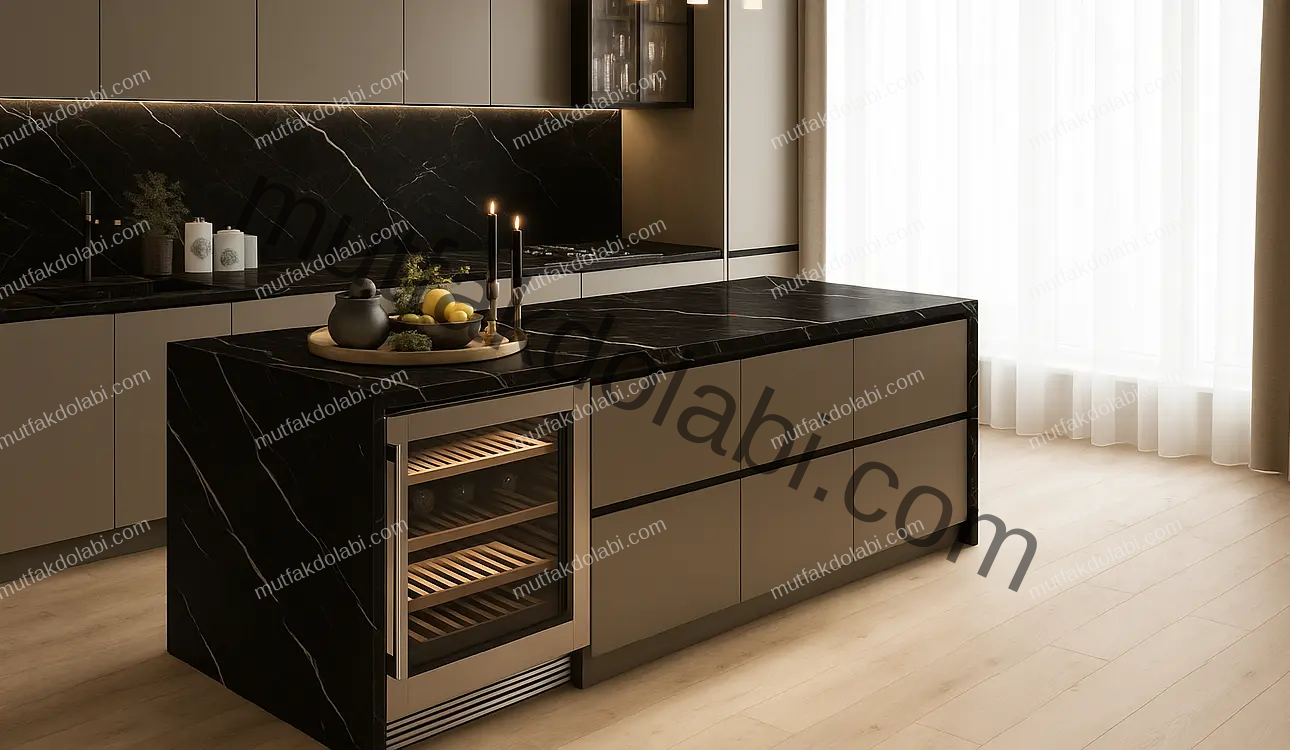
10. Kitchen Island Countertop Height
A kitchen island provides an additional workspace in the kitchen and is particularly useful for functions such as food preparation or entertaining guests. The kitchen island countertop height is generally slightly higher than the kitchen counter. Ideally, the kitchen island countertop height should be between 90 cm and 95 cm. This is a height that allows you to work comfortably according to your kitchen functions. If you plan to do other tasks in the kitchen besides food preparation, you can make the island a little higher (around 100 cm) to use it as a bar-style area.
11. Other Factors to Consider in Kitchen Design
The most important thing to consider in kitchen design is to offer both functionality and aesthetics. It is important to determine elements such as kitchen dimensions, countertop height, and cabinet layout according to the needs of the people who will be using the kitchen. Furthermore, ensuring a harmonious and ergonomic arrangement between countertops and cabinets makes time spent in the kitchen more enjoyable and productive. During kitchen design, you should also consider factors such as lighting, color coordination, and material selection. These elements ensure your kitchen is both aesthetically pleasing and user-friendly.
In this way, each topic in your writing is carefully focused on, and the information under each heading is clearly organized.